Patterns in the Static: Why Australian Slot Players Keep Seeing Signals That Aren't There
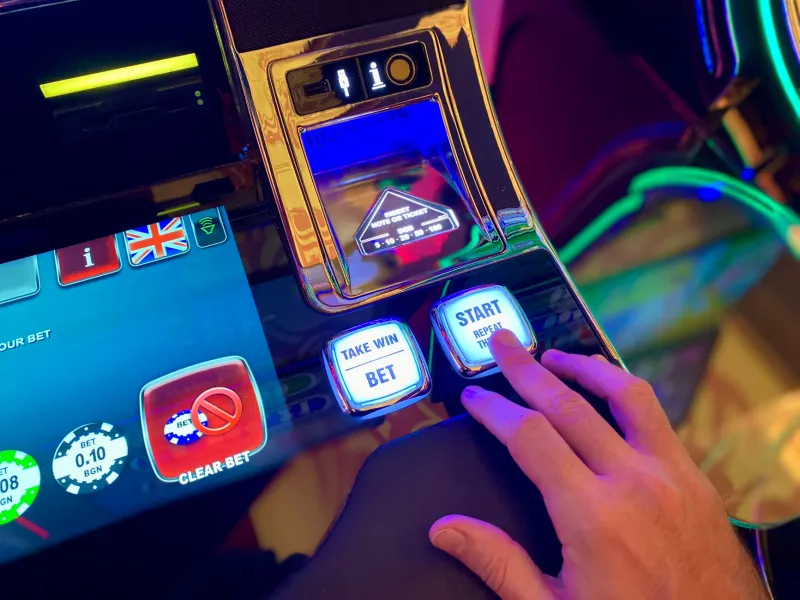
There is a particular kind of confidence that settles over a player who believes they have cracked the code. You have seen it at the local club, at the online lobby, perhaps in your own reflection. The slight lean forward, the narrowed eyes, the quiet certainty that this machine — this specific machine, at this specific moment — is ready to pay. It feels like insight. It feels, frankly, like skill.
It is neither.
The conviction that one has identified a pattern in slot outcomes is one of the most persistent and expensive illusions in Australian gaming culture. Understanding precisely why our brains construct these narratives, and how to interrupt them, is not merely an academic exercise. For any player who considers themselves serious about their craft, it is essential knowledge.
The Brain That Cannot Tolerate Randomness
Human cognition is, at its core, a pattern-recognition engine. This is not a flaw — it is the mechanism that allowed our ancestors to distinguish a rustling predator from a harmless breeze, to notice when the rains were coming, to read the body language of a rival. The brain is so proficient at detecting patterns that it will manufacture them from noise when none exist.
Psychologists call this tendency apophenia — the spontaneous perception of connections and meaningfulness in unrelated phenomena. A related concept, pareidolia, explains why we see faces in clouds or the grain of timber. These are not signs of irrationality. They are evidence of an extraordinarily efficient cognitive system operating exactly as designed.
The problem arises when that same system is applied to a random number generator.
Modern online slot machines — including every title available through reputable Australian-licensed platforms — operate on certified RNG (Random Number Generator) technology. Each spin is a statistically independent event. The machine has no awareness of its previous outcomes. It does not 'warm up', it does not 'go cold', and it is entirely indifferent to how long you have been sitting in front of it.
The Gambler's Fallacy in Australian Dress
Australia has a uniquely embedded gaming culture. Pokies are woven into the social fabric of pubs, clubs, and now digital platforms in a way that has no precise equivalent elsewhere in the developed world. With that cultural familiarity comes a particular brand of folk wisdom — the kind passed between mates at the bar, shared in hushed tones as though it were proprietary intelligence.
'That one hasn't paid out in hours. It's due.'
'I always win on the first ten spins. After that, I walk.'
'Never play a machine straight after someone else has won on it.'
These beliefs are expressions of the gambler's fallacy — the mistaken intuition that past random events influence future ones. They feel logical because they mirror how the world genuinely works in many contexts. If you flip a coin and it lands heads five times running, something does seem off. But coins, unlike droughts or sporting form, have no causal memory. Neither do reels.
What makes the Australian context particularly interesting is the social reinforcement of these beliefs. When a player wins after following a personal 'system', the win is remembered vividly. The dozens of sessions where the same system produced nothing are quietly forgotten. This is confirmation bias doing its quiet, relentless work.
The Near-Miss and the Illusion of Proximity
Slot design adds another layer of complexity to this cognitive trap. The near-miss — where two jackpot symbols land on the payline and a third stops just short — is not an accident of probability. Research has consistently demonstrated that near-misses are programmed at rates higher than pure chance would produce, precisely because they generate the sensation of almost winning.
For the pattern-seeking brain, a near-miss is practically indistinguishable from a signal. 'I am close,' the mind concludes. 'One more spin and I will have it.' This is not a rational inference. It is a neurological response to a stimulus engineered to produce exactly that feeling.
Australian regulators have increasingly scrutinised this mechanic, and players on licensed platforms do benefit from certain protections. Nevertheless, the near-miss remains a standard feature of the slot experience, and awareness of its psychological function is the only reliable defence against it.
What the Streaks Are Actually Telling You
Perhaps the most seductive pattern of all is the winning streak. Three, four, five consecutive profitable spins feel like momentum — like the universe confirming that your read of the situation was correct. The temptation to increase stake size, to lean in, to press the advantage, is almost irresistible.
But variance in slot outcomes is not momentum. It is statistical noise. A certified RNG will produce clusters of wins and clusters of losses simply because that is what genuine randomness looks like. Truly random sequences are not evenly distributed. They bunch, they gap, they occasionally produce extraordinary runs in either direction. Interpreting those runs as meaningful patterns is, again, the pattern-recognition engine doing its job on entirely inappropriate material.
The disciplined player — the one who approaches the reels with the composure that befits a premium gaming experience — understands this at a structural level. They may enjoy a hot streak. They do not bet their session bankroll on its continuation.
Recalibrating the Royal Instinct
None of this is to suggest that knowledge and strategy have no place at the slots. Understanding return-to-player percentages, selecting games with volatility profiles that suit your bankroll, and managing your session with intention are all genuinely valuable practices. The distinction is between legitimate strategy and the confabulation of patterns where none exist.
The most useful question a player can ask themselves mid-session is this: 'Am I making this decision based on evidence, or am I responding to a story I have told myself about what the machine is doing?'
If the honest answer is the latter, the crown of genuine player sophistication lies in recognising that — and choosing differently.
The reels do not know you. They do not remember you. They are not conspiring against you, and they are not rewarding your patience. What they offer is a mathematically defined entertainment experience, and the players who extract the most from it are those who engage with that reality rather than the more flattering fiction their brains prefer to construct.