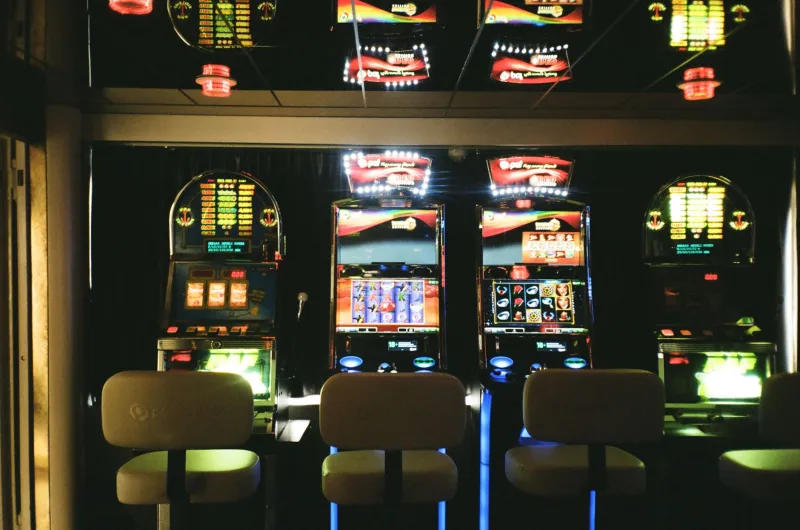
The Invisible Drain: How Australian Slot Players Spend Far More Than They Ever Intended

There is a particular kind of discomfort that arrives not during a session, but after. The moment a player glances at their account balance and realises, with a quiet sinking feeling, that the evening cost them twice what they had planned. No single catastrophic decision was made. No reckless all-in moment. Just a gradual, almost imperceptible drift — and suddenly the budget was gone.
This experience is far more common than the industry typically acknowledges, and far more structured than most players realise. For Australian online slot enthusiasts, understanding precisely why this happens is the first meaningful step toward ensuring it does not keep happening.
The Budget That Never Really Held
Ask almost any regular slot player whether they set a budget before playing, and the overwhelming majority will say yes. Ask them whether they stick to it, and the answers grow considerably less confident.
Behavioural economists refer to the gap between stated intention and actual behaviour as an "intention-action gap" — and within the context of online casino play, this gap is wide, well-documented, and actively exploited by platform design.
The problem rarely begins with dishonesty. Players genuinely intend to spend only what they nominate. The difficulty lies in how the environment around them is engineered to gradually redefine what "enough" looks like.
Session Drift and the Normalisation of Extended Play
One of the most insidious mechanisms at work is what researchers in gambling behaviour term session drift — the gradual extension of a gaming session beyond its originally intended boundaries, typically without any conscious decision to do so.
Consider how a standard online slot session unfolds. A player begins with a clear endpoint in mind: perhaps forty-five minutes, perhaps a fifty-dollar limit. Early in the session, these parameters feel firm. But as the session progresses, several subtle forces begin to erode them.
First, near-miss events — spins that come agonisingly close to a significant win — trigger a neurological response nearly identical to an actual win. The brain registers anticipation fulfilled rather than disappointment, encouraging the player to continue. Slot machines, whether physical or digital, are calibrated to produce these near-misses at a frequency far above what random distribution would naturally generate.
Second, the absence of natural stopping points within a digital environment removes the social and physical cues that might otherwise prompt a player to pause. There is no bartender calling last drinks, no crowded venue signalling it is time to leave. The interface is frictionless, continuous, and designed to make continuing feel easier than stopping.
By the time a player has drifted thirty minutes and thirty dollars beyond their intended limit, the original parameters have quietly ceased to feel relevant.
The Sunk Cost Fallacy in Evening Dress
Perhaps the most psychologically potent trap facing Australian players is the sunk cost fallacy — the deeply human tendency to continue investing in something because of what has already been spent, rather than any rational assessment of future value.
In practice, this sounds like: "I've already lost eighty dollars, I may as well keep going and try to win it back."
From a purely logical standpoint, the eighty dollars are gone regardless of what happens next. The odds on the next spin are identical to what they were at the very beginning of the session. The previous losses have no bearing whatsoever on future outcomes. And yet the emotional weight of those losses creates a powerful psychological pressure to keep playing — not because continuing is rational, but because stopping feels like accepting a loss that somehow still feels reversible.
This fallacy is not a character flaw unique to problem gamblers. It is a documented cognitive bias that affects virtually all human decision-making under conditions of loss. Casino environments, however, are uniquely well-suited to triggering it repeatedly and intensively.
Interface Architecture and the Blurring of Financial Boundaries
Beyond individual psychology, the structural design of online casino platforms plays a significant and underappreciated role in budget erosion.
Consider the near-universal use of digital credits rather than currency. When a player deposits one hundred Australian dollars and sees a balance of ten thousand credits, the psychological relationship to that money changes measurably. Spending five hundred credits feels abstract in a way that spending five dollars does not. This is not accidental — it is a deliberate design choice, borrowed directly from the chip systems used in physical casinos for precisely the same reason.
Similarly, the placement and visibility of balance displays within slot interfaces is carefully considered. Many games position the balance counter in a peripheral location, requiring a deliberate shift of attention to check it. The reels, animations, and bonus triggers occupy the visual centre — the balance sits quietly at the edge, easy to ignore.
Autoplay functions further reduce the cognitive engagement required to continue spending. A player who must press a button for each spin is, at minimum, making a discrete and conscious decision with each wager. Autoplay removes even that minimal friction, allowing credits to drain in a state closer to passive observation than active choice.
Practical Strategies for Genuine Financial Discipline
Acknowledging these mechanisms is not an argument against playing. It is an argument for playing with clear eyes and deliberate structure.
Several approaches have demonstrated genuine effectiveness for Australian players seeking to maintain meaningful budget discipline:
Set limits before depositing, not during play. The moment a session begins, cognitive bias begins operating. Responsible gambling tools — deposit limits, session time limits, loss limits — are most effective when configured during a calm, pre-session state. Most reputable Australian-licensed platforms offer these tools; using them proactively, rather than reactively, changes their effectiveness entirely.
Convert credits back to dollars regularly. Periodically pausing to mentally convert your remaining credit balance to its dollar equivalent disrupts the abstraction that digital currency creates. Some players find it useful to keep a simple note beside them with the conversion rate as a constant reminder.
Treat near-misses as losses, not almost-wins. Reframing the near-miss experience is cognitively demanding but genuinely valuable. A spin that does not pay is a loss, regardless of how close the symbols came to aligning. Accepting this reduces the emotional pull to "chase" outcomes that were never actually close.
Establish a hard stop, not a soft one. A budget of "around fifty dollars" will reliably become seventy. A budget of fifty dollars, with a platform-enforced loss limit set at that exact figure, will not. The distinction between an intention and a structural constraint is the difference between discipline that depends on willpower in the heat of a session and discipline that is built into the environment itself.
The Crown Carries Responsibility
At Royal Reels AU, we hold a firm conviction that premium gaming is not merely about the quality of the titles on offer or the elegance of the experience — it is about the integrity of the relationship between platform and player.
Understanding the mechanisms that erode budgets is not cause for cynicism. It is cause for informed, empowered play. The players who genuinely enjoy online slots over the long term are those who engage with the experience on their own terms, with clear limits and clear eyes — not those who are swept along by forces they never paused to examine.
The reels will always be there. The money you bring to them deserves to be treated with the same respect the experience itself demands.