Crowns Without Kingdoms: What Australian Casino VIP Tiers Are Really Selling You
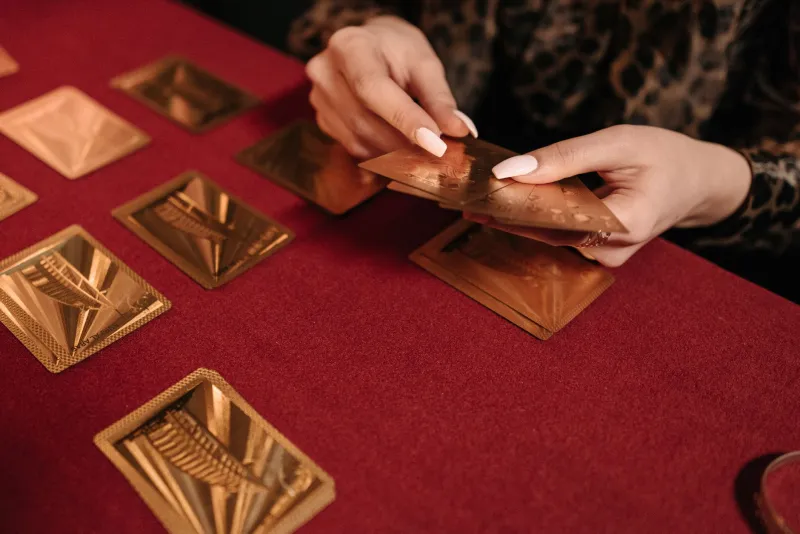
There is something deeply seductive about being told you are special. Online casinos understand this better than almost any other industry, and they have built entire architectural systems around that single, powerful truth. Across Australia, thousands of players log in each week not merely to spin a reel or chase a jackpot, but to climb — to ascend through tiers with names like Platinum, Elite, and Royal, collecting digital badges and honorary titles that feel, in the moment, like genuine achievement.
But achievement measured in what, exactly? That is the question worth asking.
The Anatomy of a Tier
Most casino VIP programs follow a broadly similar structure. Players accumulate points through wagering activity, and as those points accrue, they unlock successive membership levels. Each level arrives with a fanfare of imagery — new colour schemes, embossed iconography, perhaps a congratulatory message from a "dedicated account manager." The language is invariably regal. You are not merely a returning customer; you are a valued member of an exclusive inner circle.
The design is deliberate. Researchers in behavioural psychology have long documented what is sometimes called the "endowed progress effect" — the tendency for people to work harder toward a goal when they feel they have already made meaningful headway. Casinos exploit this by engineering tier systems that create the sensation of forward momentum. The moment you reach Silver, Gold suddenly appears attainable. Once you hold Gold, Platinum shimmers just ahead. The horizon is always positioned just beyond your current reach.
For Australian players, who have grown up in a culture that prizes both competition and a fair go, this dynamic carries particular resonance. There is an instinctive appeal in the idea of earning your status through effort — even when that effort consists of placing wagers on a digital poker machine at midnight.
Status Symbols Dressed as Rewards
Here is where the analysis becomes uncomfortable. Many of the benefits marketed as tier rewards are, upon close inspection, primarily symbolic rather than substantive. A personalised greeting card on your birthday, a dedicated phone line that connects you to the same support team available to standard members, an invitation to an exclusive promotion that turns out to carry wagering requirements no different from a standard welcome bonus — these are the trappings of prestige, not the substance of it.
The distinction matters enormously. A genuine reward reduces your cost of play, improves your odds in some meaningful way, or delivers tangible value outside the casino ecosystem — a cashback arrangement with real withdrawal conditions, a bonus with genuinely relaxed terms, or access to events and experiences that carry actual monetary worth. A status symbol, by contrast, makes you feel elevated while leaving your financial position unchanged or, more commonly, diminished.
Australian consumer culture has a healthy scepticism of pretension — we tend to distrust anything that feels like it is pulling rank without earning it. Yet within the specific context of online gambling, that same scepticism often evaporates, replaced by the dopamine-adjacent satisfaction of watching a progress bar inch toward the next level.
The Spending Escalator Nobody Mentions
Perhaps the most consequential feature of VIP tier systems is not what they offer players who reach the top, but what they silently demand of players trying to get there. Tier maintenance is frequently underemphasised in the promotional copy and overemphasised in the fine print. Many programs require players to re-qualify for their current tier each month or quarter, meaning the spending required is not a one-time investment but an ongoing commitment.
Consider the arithmetic plainly. If maintaining Gold status requires $2,000 in monthly wagering, and the associated cashback rate returns 5 per cent of losses, then a player who loses at the statistically expected rate across that wagering volume is receiving perhaps $40 to $80 back while having committed to spending patterns designed around tier preservation rather than genuine entertainment value. The crown, in this scenario, costs considerably more than it confers.
This is not an accusation of fraud — it is an observation about incentive design. Casinos are businesses, and their tier systems are engineered to increase player lifetime value. Understanding that engineering is not cynicism; it is simply good sense.
What Is Actually Worth Pursuing
None of this is to suggest that VIP programs are uniformly without merit. Some genuinely do offer meaningful advantages to players who engage with them strategically rather than aspirationally. The benefits worth scrutinising carefully include:
Cashback with real withdrawal terms. A cashback offer that can be withdrawn without wagering requirements attached is a genuine financial concession. These are comparatively rare, but they exist, and they are worth identifying.
Reduced withdrawal processing times. For players who withdraw regularly, priority processing is a concrete operational benefit, not merely a symbolic one.
Bonus terms that reflect the tier level. If a VIP bonus carries lower wagering requirements than standard offers — say, 15x rather than 40x — the practical difference in expected value is meaningful and calculable.
Dedicated support with actual authority. A genuine account manager who can resolve disputes, adjust limits, or escalate complaints effectively is a different proposition from a branded email address that routes to the standard queue.
The question every Australian player should ask before investing effort in tier progression is simple: if I strip away the imagery and the language, what does this tier actually do for my bottom line?
The Regal Illusion and How to See Through It
Premium casino branding is extraordinarily good at creating an atmosphere in which status feels synonymous with value. The visual language of royalty — crowns, gold, velvet, crests — is not accidental. These symbols carry centuries of cultural association with wealth, exclusivity, and earned distinction. When a casino wraps its Silver tier in that imagery, it is borrowing that cultural weight and applying it to what is, structurally, a loyalty points scheme.
The antidote is not cynicism but clarity. Approach every tier benefit the way you would approach a product review: with specific questions, a demand for concrete answers, and a willingness to walk away from anything that does not pass scrutiny. The most genuinely rewarding casino relationships are those built on transparent terms, not those decorated with the most elaborate iconography.
Australia's casino players are, by and large, a sophisticated cohort. The same instincts that lead a punter to read the form guide before placing a bet at the track should be brought to bear on the fine print of a VIP program. The crown is a compelling image. Whether it comes with a kingdom attached is an entirely separate matter — and one worth investigating before you spend another dollar climbing toward it.